What is the rarest colour in the world?
A purple fit for emperors. A blue with no blue pigment. The answer is more beautiful than a single colour name.
QUESTION FROM A READERAsked by Han Leong · Penang
GOT 30 SECONDS?
The short answer
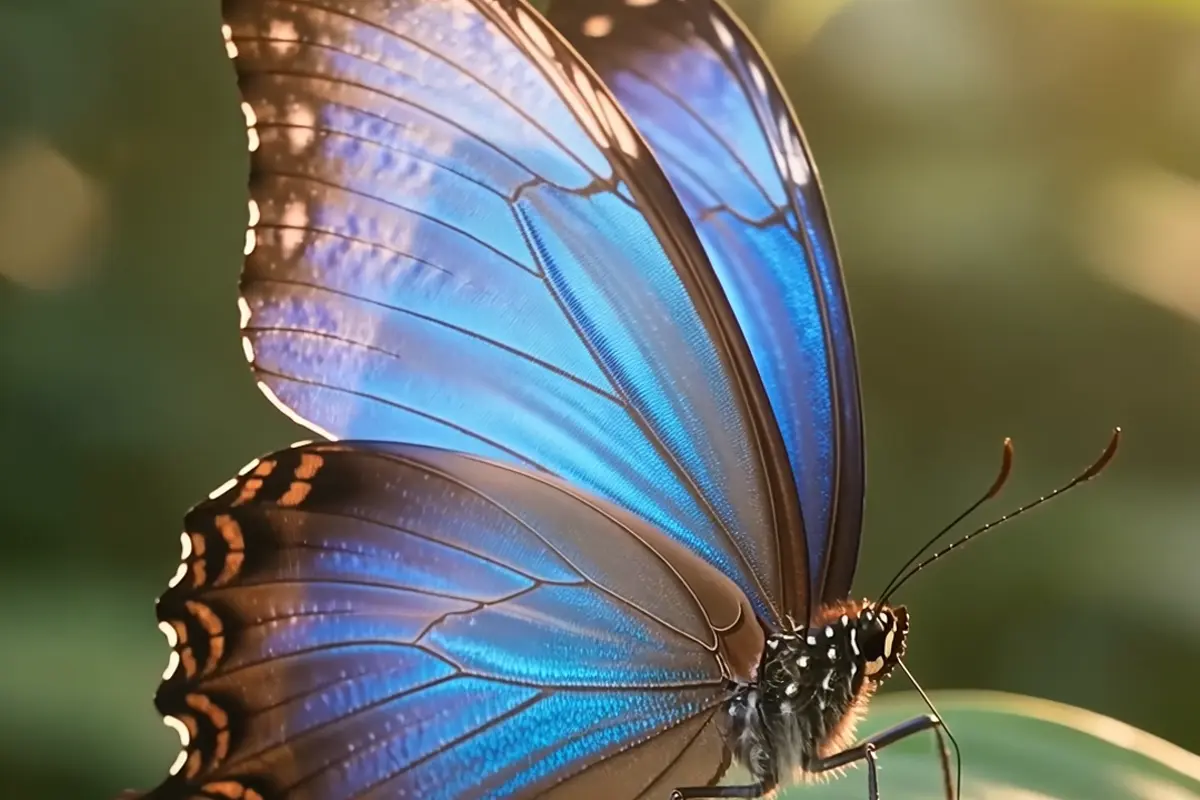
There is no single winner across everything we call colour. A scarce dye, an unusual animal colour and a newly invented pigment are different things. Purple has a remarkable history of luxury; a blue morpho butterfly has an even better trick: its brilliant blue comes from microscopic wing structures rather than blue pigment.
A good question with three very different answers
Han Leong from Penang asked: “What is the rarest colour in the world?” It sounds like the sort of question that should have a one-word answer. Purple. Blue. Some astonishing shade you have never heard of.
But try choosing the winner. Are we counting how many animals wear a colour? How much pigment exists? How hard it was to dye a robe two thousand years ago? Or every coloured surface on Earth, including the sky?
Change what you count and you change the answer. Our conclusion: crowning one colour the rarest in the entire world would promise more than these comparisons can establish. The contenders, though, have wonderful stories.
Purple: when your clothes announced your fortune
Tyrian purple was a prized ancient dye made from marine molluscs. Its expense helped turn purple clothing into a symbol of wealth and power. This was luxury you could recognise across a room.
That makes it a story about a scarce, costly material—not proof that the colour purple itself is the rarest colour today. A purple shirt from a modern shop and an ancient Tyrian-purple garment can look related while having very different ingredients and histories.
Blue: the butterfly that does not need blue paint
A blue morpho can look like a tiny piece of electric-blue foil flying through the greenery. But its brilliant blue is structural: microscopic arrangements in its wing scales manipulate light, strengthening some wavelengths and cancelling others.
Think less of painting a wall and more of building a surface that handles light in a very particular way. The blue is real. Blue pigment is not what makes this blue.
That is the delightful trap in the question. Counting blue-looking creatures is not the same job as counting creatures that manufacture blue pigment. And this butterfly example alone cannot rank all colours in nature.
“But look up. The whole sky is blue.”
Exactly. Blue is hardly missing from everyday life. NASA explains that air molecules scatter shorter-wavelength blue light more strongly than longer-wavelength red light, helping make the daytime sky look blue.
There is no enormous pot of blue dye above your head. A sky and a painted door can both look blue for different physical reasons. That is why a headline about a rare pigment should not turn into “blue barely exists”.
A blue scientists found by accident
In 2009, researchers at Oregon State University were investigating materials for electronics. After heating a mixture to around 1,200°C, they got an unexpected result: a vivid blue compound.
It became known as YInMn Blue, named for yttrium, indium and manganese. Its appeal was not merely its striking colour. Stability and the way it reflects near-infrared light opened possibilities for durable coatings and surfaces that absorb less heat than comparable alternatives.
This is a new material for producing blue, not a discovery that human eyes had never encountered blue before. And being a remarkable invention does not automatically make something the world’s rarest colour.
So what should you tell the family chat?
Try this: “There isn’t one rarest colour. Purple has a famous luxury-dye story, and some spectacular blues come from structure rather than pigment.”
The better follow-up is: how was that colour made? It takes you from emperors’ clothes to a butterfly’s wings to a laboratory furnace. That is a much more interesting journey than a colour leaderboard.
Have another question that deserves a public answer? Send it through Ask Izzitnot. We may turn it into a story, reel or carousel that everyone can discover and share.
TAKE THIS WITH YOU
Rarest colour? First ask: rare as a dye, a pigment or an appearance? A butterfly can shine blue without blue pigment—and that is more interesting than picking a winner.
HAN LEONG ASKED · MIRA & KAI ANSWER
A colourful mystery.
Watch the answer, then send us the question you have always wondered about.
Ask your question ↗Sources
Used to check the facts in this story.
- Butterfly research: Vukusic and colleagues, Quantified interference and diffraction in single Morpho butterfly scales ↗
- Biomimicry Institute: How morpho wings produce colour ↗
- NASA: Why is the sky blue? ↗
- Oregon State University: The discovery and chemistry of YInMn Blue ↗
- Associated Press: The history and meaning of purple ↗